
Ambulatory EEG Monitoring in Barbados & Saint Lucia
When a Routine EEG Isn't Enough
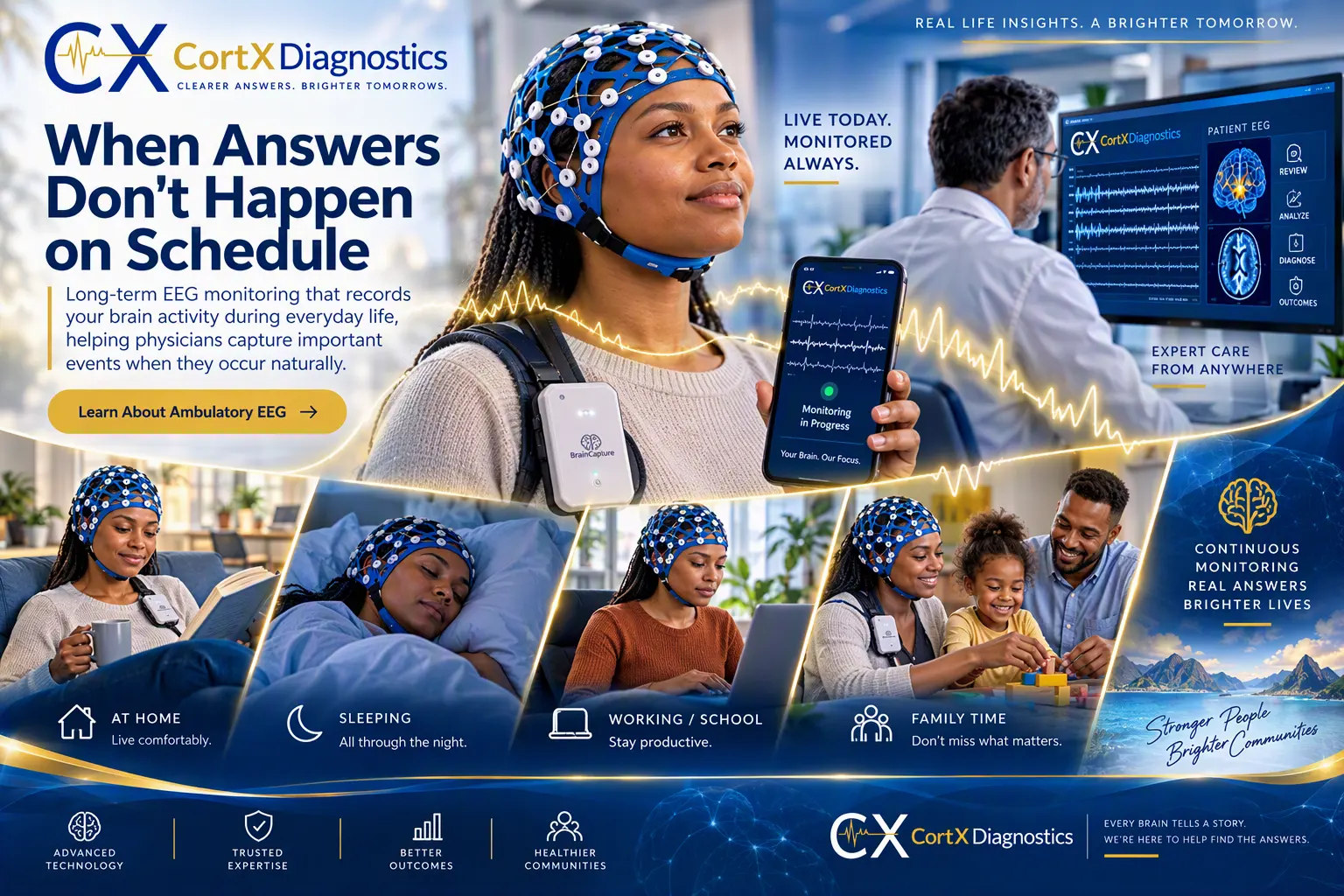
Sometimes symptoms do not happen often enough to be captured during a routine EEG.
You may experience episodes:
- Once a week
- A few times a month
- Only during sleep
- At unpredictable times
When this happens, your healthcare provider may recommend an Ambulatory EEG, which allows your brain activity to be recorded for a much longer period while you go about your normal daily routine.
What Is an Ambulatory EEG?
An Ambulatory EEG is a portable EEG study that continuously records your brain's electrical activity for an extended period.
Unlike a routine EEG performed in a clinic, an Ambulatory EEG allows you to leave the office and continue your normal activities while the recording is taking place.
Think of it as a "long-term brain recording."
Why Might My Doctor Order an Ambulatory EEG?
An Ambulatory EEG may be recommended if you have:
- Suspected seizures
- Episodes of loss of awareness
- Unexplained blackouts
- Staring spells
- Confusion episodes
- Memory lapses
- Possible nighttime seizures
- Symptoms that were not captured on a routine EEG
Because the recording lasts much longer, there is a greater chance of capturing important information.
How Does an Ambulatory EEG Work?
Small electrodes are placed on the scalp and connected to a portable recording device.
The recorder is lightweight and designed to be carried comfortably throughout the day.
While the EEG records brain activity:
- You can usually remain at home.
- Sleep is recorded.
- Daily activities are recorded.
- Symptoms can be documented in a diary or event log.
Your healthcare provider will explain any activity restrictions before the study.
Why Is Recording During Normal Life Helpful?
Many neurological symptoms do not occur in a medical office. Seizures or seizure-like events often occur when people are relaxing at home, sleeping, working, attending school, or performing normal activities.
Recording brain activity in a real-life environment can provide valuable diagnostic information.
Can an Ambulatory EEG Detect Seizures?
Yes.
Ambulatory EEG monitoring can help identify:
- Epileptic seizures
- Silent seizures
- Sleep-related seizures
- Abnormal brain activity
- Events that may not be related to epilepsy
The results help healthcare providers better understand what may be causing a person's symptoms.
Ambulatory EEG and Sleep
One major advantage of Ambulatory EEG is that it records both wakefulness and sleep. This is important because some seizure disorders are more active during sleep, and in some people seizure-related abnormalities only appear while sleeping.
Is an Ambulatory EEG Better Than a Routine EEG?
Not necessarily. The two studies serve different purposes.
Routine EEG
- Short recording
- Performed in the clinic
- Often used as a first-line test
Ambulatory EEG
- Longer recording
- Includes normal daily activities
- Includes overnight sleep
- Increases the likelihood of capturing infrequent events
Your healthcare provider will recommend the type of study that best fits your situation.
What Should I Expect During the Test?
Most patients are surprised by how simple the process is.
You may be asked to:
- Keep an activity diary
- Record any symptoms that occur
- Press an event button if instructed
- Follow normal routines
- Return the recorder after the study is complete
The recording is then reviewed by trained specialists.
What Happens After My Ambulatory EEG?
The recorded data is analyzed and interpreted by specialists.
Your healthcare provider will review the results together with your symptoms, medical history, physical examination, and other tests such as MRI or routine EEG.
The goal is to determine whether abnormal brain activity may be contributing to your symptoms.
Benefits of Ambulatory EEG Monitoring
- Extended recording time
- Monitoring in a natural environment
- Includes sleep recording
- Increased chance of capturing events
- Helps diagnose difficult-to-capture symptoms
- Supports treatment decisions
Frequently Asked Questions About Ambulatory EEG
How long does an Ambulatory EEG last?
Most studies last between 24 and 72 hours, although the duration depends on the reason for testing and your healthcare provider's recommendations.
Can I sleep during the recording?
Yes. In fact, recording sleep is one of the most valuable parts of an Ambulatory EEG study.
Can I leave my house?
In many cases, yes. Your healthcare provider will explain any restrictions based on your specific study.
Is the test painful?
No. The electrodes record electrical activity from the brain, but they do not deliver electricity into your body.
Can I shower during the test?
Generally, bathing and showering are restricted because the equipment must remain dry. You will receive instructions before your study.
What if I have symptoms during the recording?
This is often helpful. If symptoms occur during the study, they can sometimes be compared directly with the EEG recording, providing valuable diagnostic information.
Can an Ambulatory EEG diagnose epilepsy?
An Ambulatory EEG can provide important information that may support the diagnosis of epilepsy. However, results must always be interpreted together with your symptoms, history, and other medical findings.
Is Ambulatory EEG Right for Me?
If you have experienced unexplained episodes, possible seizures, blackouts, memory lapses, sleep-related events, or symptoms not captured on a routine EEG, your healthcare provider may recommend Ambulatory EEG monitoring as the next step.
EEG Services Through CortX Diagnostics
CortX Diagnostics provides advanced EEG testing services to support the evaluation of epilepsy, seizures, blackouts, loss of awareness, sleep-related events, and other neurological conditions.
Barbados
Delaware Neurology Delaware Building St. Michael, Barbados
Saint Lucia
Serenity Therapeutic Centre Castries, Saint Lucia
Key Message
Important: this article is general information only. It does not replace advice from a qualified healthcare professional. In an emergency, contact your local emergency medical service immediately.