
A painless test of the brain's electrical activity
An electroencephalogram (EEG) is a non-invasive test that records the brain's electrical activity. Routine EEG testing helps physicians evaluate a wide range of neurological symptoms and conditions.
EEG studies provide valuable information that helps healthcare providers diagnose neurological disorders and guide treatment decisions. Our team works closely with referring healthcare providers to ensure high-quality recordings and clinically meaningful diagnostic information.
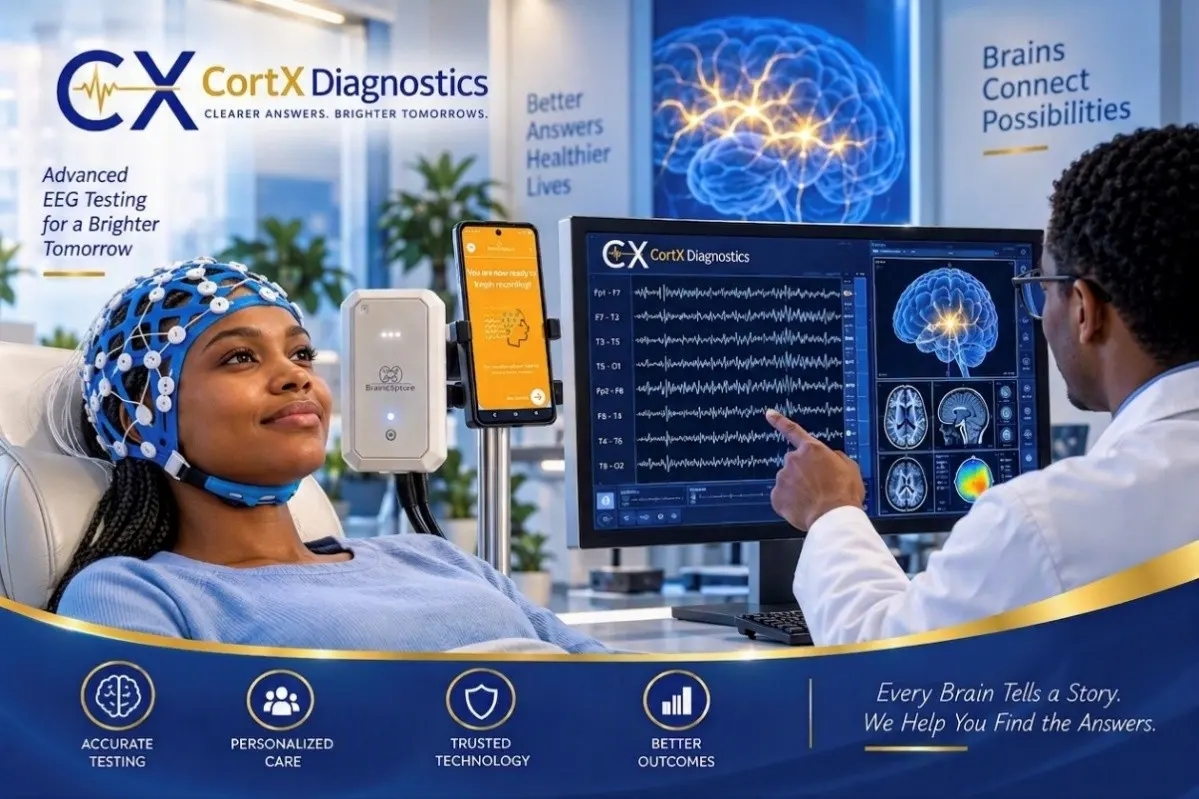
Routine, sleep and sleep-deprived EEG
Routine EEG (20–60 minutes)
First-line evaluation for new seizure onset, unexplained blackouts, and baseline studies.
Sleep EEG
Enhanced diagnostic yield for suspected nocturnal events and sleep-activated epileptiform activity.
Sleep-Deprived EEG
Increased sensitivity for subtle or hard-to-detect epileptiform discharges.
Ambulatory EEG (24 hours+)
Extended home-based monitoring for infrequent events and daily-life triggers.
Ambulatory EEG monitoring →EEG testing for seizures, epilepsy and blackouts
An EEG may be recommended for:
- Suspected seizures
- Epilepsy evaluation and epilepsy diagnosis
- Blackout episodes
- Altered awareness
- Memory disturbances
- Neurological symptoms of unclear origin
- Sleep-related neurological events
A normal routine EEG does not exclude epilepsy. Patients with epilepsy may have normal recordings between seizures. Sleep EEG, ambulatory EEG, or prolonged monitoring may be appropriate depending on the clinical picture.
Preparing for your EEG
Read our checklist for what to do before your appointment, what to bring, and what to expect on the day.
Routine EEG testing in Barbados and Saint Lucia
For referral information, EEG scheduling and service availability, contact the testing location nearest you.
Saint Lucia: Serenity Therapeutic Centre
Microlab building, Chausee Rd, Castries, Saint Lucia
Phone: (758) 715-7825
Learn more in the Educational Hub
Understanding EEG Testing
What EEG testing records, why it is performed, the main EEG study types, and what patients can expect.
Read: Understanding EEG Testing →Understanding Your EEG Results
Learn what normal and abnormal EEG findings may mean, how reports are interpreted, and what questions to discuss with your provider.
Read: Understanding Your EEG Results →When Should I Consider an EEG?
Warning signs that warrant a medical review, and when an EEG may help find the cause.
Read: When Should I Consider an EEG? →Frequently Asked Questions
What is an ambulatory EEG?
An ambulatory EEG is a portable brain monitoring test that records electrical activity over an extended period while patients go about their normal daily activities.
How is epilepsy diagnosed?
Epilepsy is diagnosed using medical history, neurological examination, EEG testing, imaging studies, and clinical assessment by qualified healthcare providers.
Do I need a referral for an EEG?
Referral requirements may vary depending on your location and healthcare provider.
Can EEG testing detect silent seizures?
Yes. EEG monitoring is often the most effective method for identifying non-convulsive seizures and other abnormal brain activity that may not be visible clinically.
Where does CortX Diagnostics provide services?
CortX Diagnostics provides neurodiagnostic services in Barbados, Saint Lucia, and throughout the Caribbean.