
Understanding Epilepsy

What Is Epilepsy?
Epilepsy is a neurological condition that causes a person to have recurring seizures. A seizure occurs when there is a sudden burst of abnormal electrical activity in the brain that temporarily disrupts how the brain works.
Epilepsy can affect people of any age, from infants to older adults. It is one of the most common neurological conditions worldwide and affects more than 50 million people globally, according to the World Health Organization (WHO).
Epilepsy can affect anyone, regardless of age, race, or lifestyle. It is one of the most common neurological disorders worldwide.
A person with epilepsy may experience:
- Convulsions (shaking movements)
- Staring spells
- Brief loss of awareness
- Unusual sensations
- Changes in behavior or emotions
In Simple Terms
Think of the brain as a complex electrical network. Normally, brain cells communicate using carefully organized electrical signals. In epilepsy, these signals can sometimes become disrupted, causing a seizure.
Depending on the area of the brain involved, a seizure may cause:
- Staring spells
- Unusual sensations
- Sudden movements or jerking
- Loss of awareness
- Changes in behavior or emotions
- Loss of consciousness
Important Facts
- Epilepsy is a medical condition.
- Epilepsy is not a mental illness.
- Epilepsy is not contagious.
- Many people with epilepsy live full, active, and successful lives.
When Is Someone Diagnosed With Epilepsy?
A healthcare provider may diagnose epilepsy when a person has:
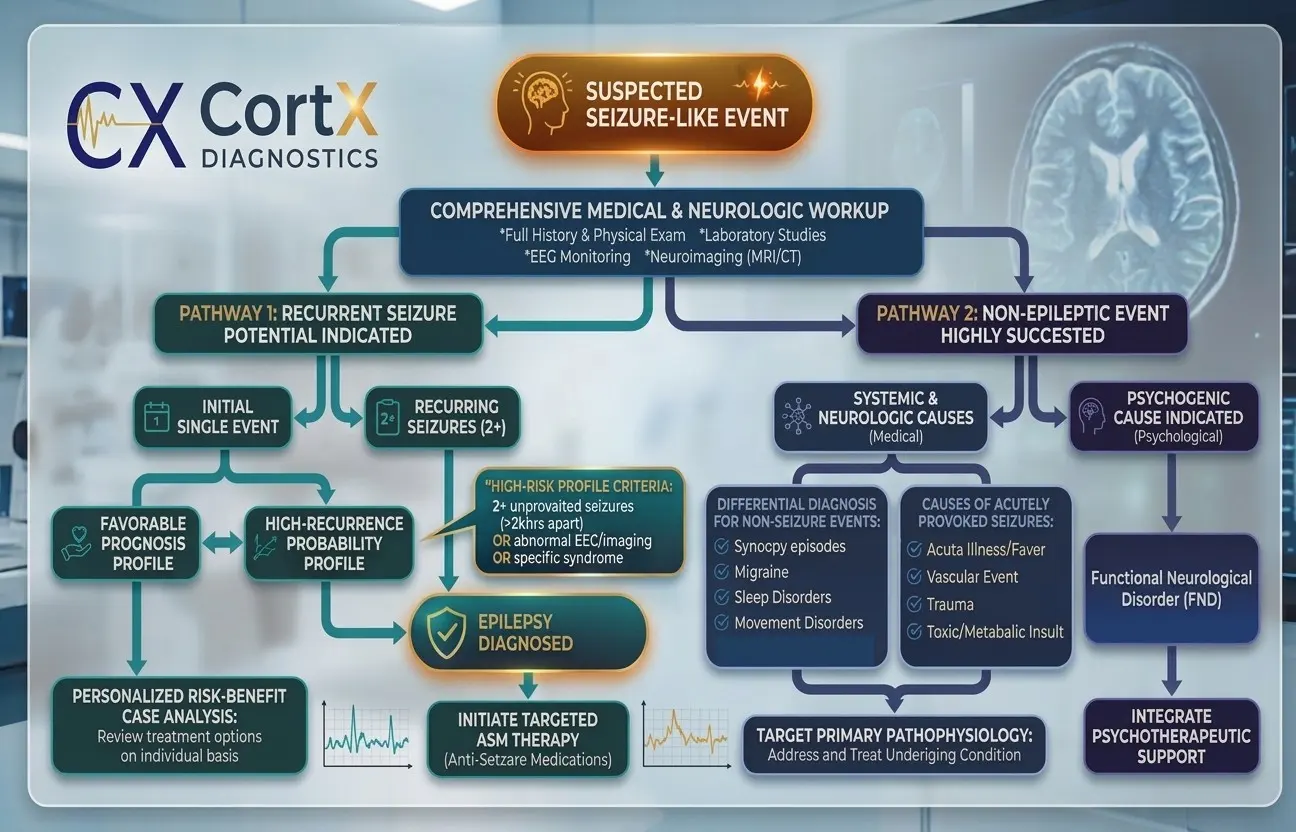
- Two or more unprovoked seizures occurring more than 24 hours apart, or
- One unprovoked seizure with a high likelihood of future seizures.
The diagnosis is based on a person's medical history, examination, brain wave testing (EEG), and sometimes brain imaging such as MRI.
How Is Epilepsy Diagnosed?
Diagnosing epilepsy involves understanding the person's seizures, reviewing medical history, and performing specialized testing.
Common diagnostic tools include:
Medical History
Doctors will ask:
- What happened during the event?
- How long did it last?
- Was consciousness affected?
- What occurred before and after?
Witness descriptions are often extremely valuable.
EEG (Electroencephalogram)
An EEG records the brain's electrical activity using small sensors placed on the scalp. The primary diagnostic tool used to record the electrical activity of the brain and identify abnormal spike patterns or seizure focus.
MRI and Brain Imaging
MRI scans provide detailed images of the brain and help identify:
- Stroke
- Tumors
- Developmental abnormalities
- Areas of injury
When Should You See a Doctor?
Recognizing the Warning Signs
Many people are unsure whether symptoms they experience are related to seizures or another neurological condition.
If you have experienced an unexplained event involving loss of awareness, unusual movements, confusion, or memory lapses, a neurological evaluation may be appropriate.
Early assessment can help identify whether further testing is needed and may lead to faster diagnosis and treatment.
Symptoms That May Require Evaluation
Consider speaking with a healthcare provider if you experience:
Episodes of Loss of Awareness
You find yourself unable to recall what happened for a brief period of time.
Recurrent Staring Spells
Others notice that you seem to "zone out" and are temporarily unresponsive.
Unexplained Jerking Movements
Sudden repetitive movements of the arms, legs, or face.
Unusual Sensations
Episodes involving:
- Strange smells or tastes
- Déjà vu sensations
- Tingling sensations
- Visual disturbances
Blackouts or Unexplained Falls
Sudden collapse or loss of consciousness should always be medically evaluated.
Events During Sleep
Symptoms may include:
- Unusual movements
- Repetitive jerking
- Waking confused
- Unexplained injuries during sleep
The Importance of Early Diagnosis
Many seizure disorders can be effectively managed once they are properly identified.
Early diagnosis may:
- Improve seizure control
- Reduce injury risk
- Improve quality of life
- Provide access to appropriate treatments
- Reduce uncertainty for patients and families
When Should I Seek Medical Evaluation?
Consider seeking medical evaluation if you experience:
- A first-time seizure
- Unexplained blackouts
- Episodes of lost awareness
- Recurrent staring spells
- Unusual involuntary movements
- Suspected seizures during sleep
Early evaluation may lead to earlier diagnosis and treatment.
Contact & EEG Referral Information
Your Journey Starts With Answers
Whether you have experienced a seizure, have concerns about epilepsy, or have been referred for neurological testing, obtaining the right diagnosis is the first step toward better understanding and treatment.
At CortX Diagnostics, we partner with healthcare providers to deliver high-quality EEG testing and specialist reporting to help evaluate epilepsy, seizures, blackout episodes, unexplained loss of awareness, sleep-related events, and other neurological concerns.
Important: this article is general information only. It does not replace advice from a qualified healthcare professional. In an emergency, contact your local emergency medical service immediately.