
Silent Seizures in Critically Ill & Comatose Patients
When Patients Cannot Tell Us What Is Happening
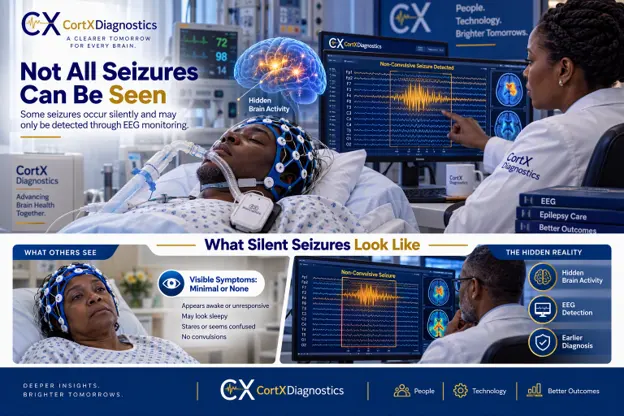
Critically ill, unconscious, sedated, or comatose patients may experience non-convulsive ("silent") seizures without any obvious shaking or physical signs. Despite appearing unresponsive, the brain may still be experiencing abnormal electrical activity.
Because these seizures are often invisible at the bedside, they can only be detected through EEG monitoring.
Patients at Increased Risk
Silent seizures are more common in patients with:
- Traumatic brain injury
- Stroke
- Brain hemorrhage
- Cardiac arrest
- Brain tumors or recent brain surgery
- Central nervous system infections
- Severe metabolic disturbances
- Prior convulsive seizures
- Prolonged sedation or critical illness
Why Silent Seizures Matter
Ongoing seizure activity may contribute to:
- Persistent confusion or altered consciousness
- Failure to awaken as expected
- Neurological deterioration
- Delayed recovery
- Non-convulsive status epilepticus (NCSE)
In many cases, there are no visible signs, making EEG essential for diagnosis.
How EEG Helps
- Determine whether a seizure is occurring
- Determine whether seizure activity continues after visible shaking stops
- Show whether treatment is working
- Help explain why a patient is not regaining consciousness
- Show whether unusual movements are seizures or another condition
Continuous EEG Monitoring
For patients at high risk, continuous EEG monitoring may be recommended for 24 to 48 hours or longer, depending on the patient's condition and EEG findings. This allows clinicians to detect seizures that might otherwise go unnoticed.
Silent Does Not Mean Harmless
Important: this article is general information only. It does not replace advice from a qualified healthcare professional. In an emergency, contact your local emergency medical service immediately.