
Seeing changes in brain function that examination can miss
In the Intensive Care Unit (ICU), critically ill patients may experience changes in brain function that are not always visible through physical examination. ICU EEG monitoring (electroencephalography) helps healthcare teams assess brain electrical activity and identify seizures, including non-convulsive or “silent” seizures that may occur without obvious physical movements.
Continuous EEG (cEEG) monitoring in the ICU is particularly valuable for patients with unexplained changes in consciousness, suspected seizures, coma, severe brain injury, or other neurological complications. By recording brain activity over an extended period, ICU EEG monitoring can help clinicians detect abnormalities, evaluate seizure activity, and support decisions about neurological care.
CortX Diagnostics ICU EEG monitoring services support neurologists, intensivists, and critical care teams by delivering timely, accurate neurophysiological data that contributes to informed clinical decision-making. Through advanced ICU brain monitoring, healthcare providers can track changes in neurological status, assess treatment effectiveness, and improve patient care in the critical care environment.
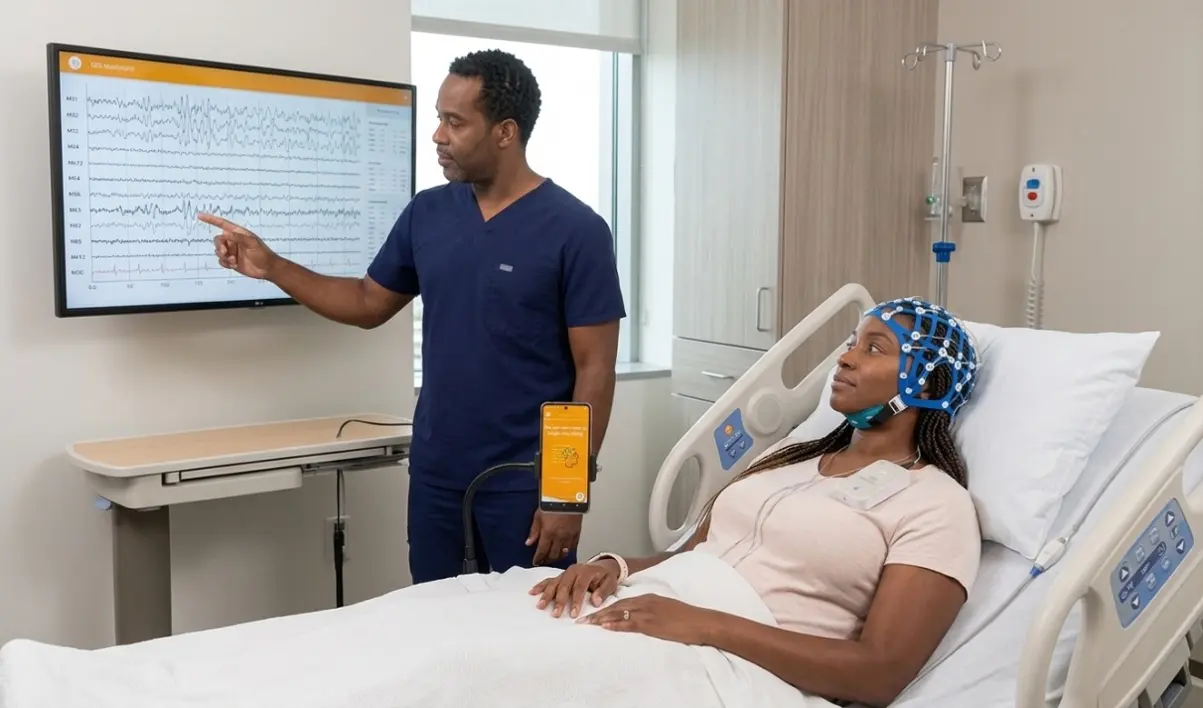
Which ICU patients benefit from EEG monitoring?
ICU EEG monitoring is commonly used for patients with:
- Unexplained altered mental status or decreased consciousness
- Coma or prolonged unconsciousness
- Suspected non-convulsive seizures or non-convulsive status epilepticus
- Cardiac arrest and post-resuscitation care
- Stroke, including ischemic and hemorrhagic stroke
- Traumatic brain injury (TBI)
- Subarachnoid hemorrhage
- Encephalitis or other brain infections
- Severe sepsis with neurological impairment
- Refractory status epilepticus requiring intensive treatment
- Patients receiving medically induced coma or deep sedation in the ICU
Silent seizures are common in critically ill patients
Many critically ill patients may experience seizures without any obvious physical signs. These “silent” or non-convulsive seizures can only be identified through continuous EEG monitoring. Studies have shown that non-convulsive seizures occur in approximately 10% to 35% of critically ill ICU patients, depending on the underlying condition and level of consciousness.
In comatose ICU patients undergoing EEG evaluation, studies have reported non-convulsive status epilepticus in approximately 8% to 10% of patients, highlighting the importance of continuous neurological surveillance.
Longer monitoring captures more seizures
Continuous ICU EEG monitoring also improves seizure detection because longer monitoring periods capture more events.
What continuous ICU brain monitoring helps teams do
- Identify silent seizures and status epilepticus
- Assess the effectiveness of anti-seizure medications
- Monitor brain function during sedation or medically induced coma
- Detect secondary neurological injury
- Assist with prognosis following cardiac arrest and severe brain injury
- Guide treatment decisions in real time
By delivering continuous insight into brain activity, ICU EEG monitoring supports timely intervention, improved neurological assessment, and more informed critical care management.
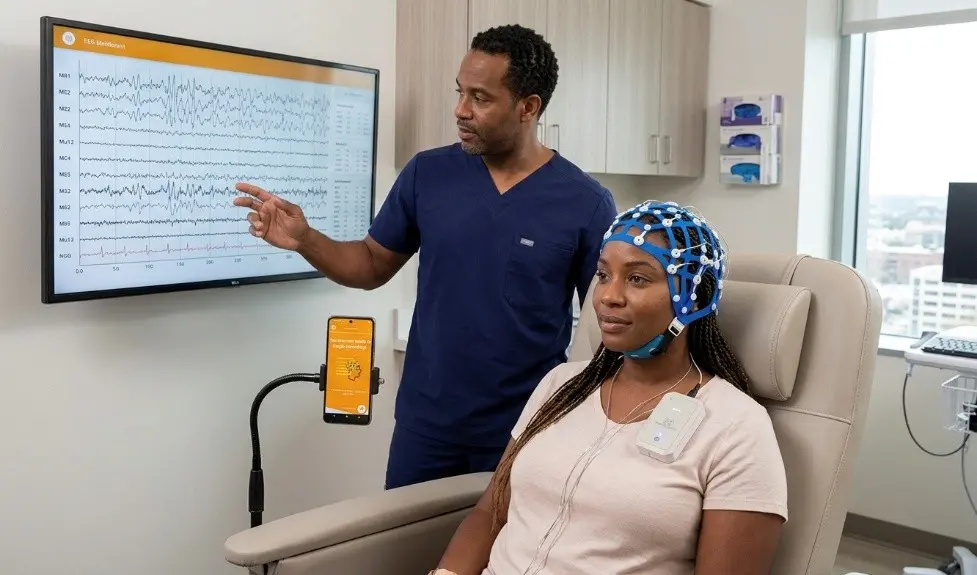
Bring ICU EEG monitoring to your critical care unit
Explore how ICU EEG and continuous brain monitoring can support the assessment of critically ill patients and improve the detection of hidden seizure activity.
Learn more in the Educational Hub
Silent Seizures in Critically Ill & Comatose Patients
How EEG detects hidden seizure activity in critically ill, unconscious, sedated, or comatose patients.
Read: Silent Seizures in Critically Ill & Comatose Patients →Understanding Non-Convulsive Seizures
Seizures without visible shaking: who is at risk, why they are hard to detect, NCSE, and why EEG is essential.
Read: Non-Convulsive Seizures (Silent Seizures) →Referring Physician Portal
Clinical EEG referral information for physicians and healthcare providers in Barbados and Saint Lucia.
Read: Referring Physician Portal →Frequently Asked Questions
What is an ambulatory EEG?
An ambulatory EEG is a portable brain monitoring test that records electrical activity over an extended period while patients go about their normal daily activities.
How is epilepsy diagnosed?
Epilepsy is diagnosed using medical history, neurological examination, EEG testing, imaging studies, and clinical assessment by qualified healthcare providers.
Do I need a referral for an EEG?
Referral requirements may vary depending on your location and healthcare provider.
Can EEG testing detect silent seizures?
Yes. EEG monitoring is often the most effective method for identifying non-convulsive seizures and other abnormal brain activity that may not be visible clinically.
Where does CortX Diagnostics provide services?
CortX Diagnostics provides neurodiagnostic services in Barbados, Saint Lucia, and throughout the Caribbean.
References
- American Clinical Neurophysiology Society (ACNS). Consensus Statement on Continuous EEG Monitoring in Critically Ill Adults and Children. acns.org
- NeuroWiki. Continuous EEG in the ICU: Indications, Detection Yields, and Monitoring Duration. neuro.wiki
- NeuroWiki. Continuous EEG & ICU Monitoring. neuro.wiki
- Clinical Tree. Seizures in the Critically Ill. clinicalpub.com