
Understanding EEG Testing
What EEG testing records, why it is performed, the main EEG study types, and what patients can expect.
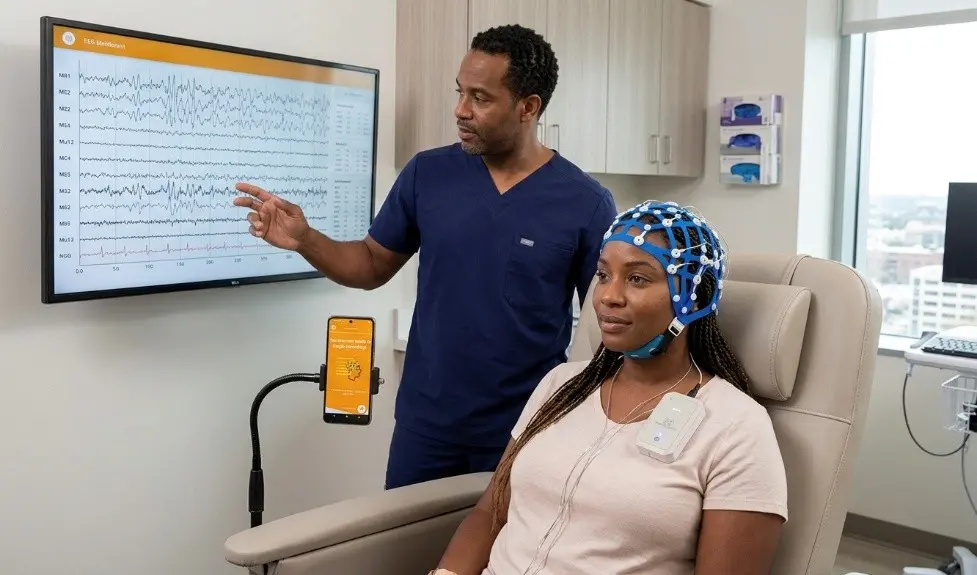
An Electroencephalogram (EEG) is a painless, non-invasive test that records the brain's electrical activity.
Small sensors called electrodes are placed on the scalp to detect and record brain wave patterns. These recordings help healthcare providers identify abnormalities that may be associated with seizures and epilepsy.
An EEG does not deliver electricity into the brain. It simply records the brain's natural electrical signals.
Why Is an EEG Performed?
An EEG may help:
- Diagnose epilepsy
- Classify seizure types
- Identify epilepsy syndromes
- Evaluate unexplained episodes of loss of awareness
- Investigate staring spells
- Assess unusual movements or behaviors
- Monitor treatment effectiveness
EEG results are often used together with a patient's history, examination, and imaging studies to make an accurate diagnosis.
What Does an EEG Show?
EEG recordings display brain waves as a series of patterns on a computer screen.
In some people with epilepsy, the EEG may show:
- Epileptiform discharges
- Spike waves
- Sharp waves
- Other abnormal electrical patterns
However, a normal EEG does not completely rule out epilepsy. Some individuals with epilepsy may have a normal EEG between seizures.
Types of EEG Testing
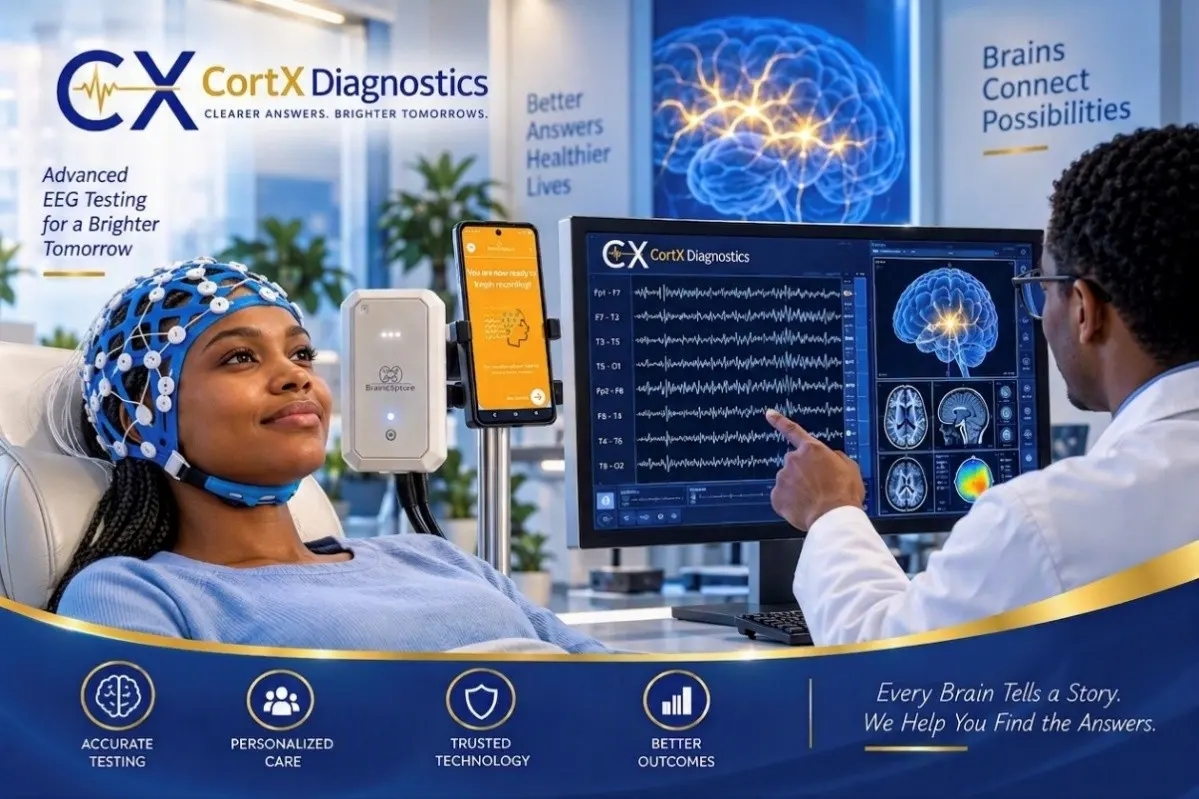
Routine EEG
Usually lasts 20 to 60 minutes, is performed while awake, and may include deep breathing and flashing lights. This is often the first step in epilepsy evaluation.
Sleep EEG
Records brain activity while the patient sleeps naturally or after sleep deprivation, because certain abnormalities may appear more clearly during sleep.
Sleep-Deprived EEG
Uses reduced sleep to increase the likelihood of identifying seizure-related abnormalities.
Ambulatory EEG
Benefits include:
- Extended recording times
- Monitoring in a home environment
- Increased chance of capturing abnormal events
Prolonged EEG Monitoring
Records EEG activity for several hours or longer when routine testing is inconclusive.
Video EEG Monitoring
Useful for:
- Diagnosing epilepsy
- Distinguishing seizure types
- Identifying Psychogenic Non-Epileptic Seizures (PNES)
- Planning epilepsy treatment
Video EEG allows healthcare providers to compare physical symptoms with electrical brain activity occurring at the same time.
What Happens During the Test?
- An electrode cap is placed on the scalp using special paste.
- Brain activity is recorded.
- Patients may be asked to follow specific instructions, such as breathing deeply or looking at flashing lights.
- The test is reviewed by trained specialists.
The procedure is painless and generally well tolerated.
Why EEG Matters
EEG testing remains one of the most important tools in the diagnosis and management of epilepsy. When combined with clinical history and imaging studies, EEG helps healthcare providers better understand seizure disorders and develop the most appropriate treatment strategy.
Frequently Asked Questions
Is EEG painful?
No. EEG testing is painless and does not involve electrical stimulation.
Can I have an EEG if I take epilepsy medication?
Yes. Your healthcare provider will advise whether any changes are needed before testing.
Does a normal EEG mean I do not have epilepsy?
Not necessarily. Some people with epilepsy may have normal EEG recordings between seizures.
How long does an EEG take?
Depending on the type of study, testing may last from less than an hour to several days.
References
- International League Against Epilepsy (ILAE)
- American Clinical Neurophysiology Society (ACNS)
- Epilepsy Foundation
- World Health Organization (WHO)
Important: this article is general information only. It does not replace advice from a qualified healthcare professional. In an emergency, contact your local emergency medical service immediately.