
Epilepsy in Older Adults
Epilepsy and Aging
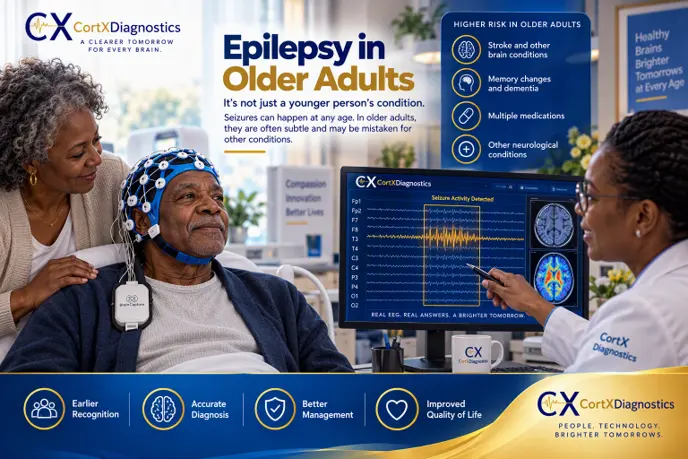
Many people are surprised to learn that epilepsy is not just a condition of childhood or young adulthood. In fact, epilepsy becomes increasingly common with advancing age.
Older adults may develop epilepsy for the first time because of age-related changes in the brain or other medical conditions affecting neurological function.
Early recognition is important because seizures in older adults are often subtle and easily mistaken for other health problems.
Why Does Epilepsy Occur in Older Adults?
Several medical conditions can increase seizure risk later in life.
Common causes include:
Stroke
Stroke is one of the most common causes of epilepsy in older adults. Seizures may occur immediately after a stroke, weeks later, or months or years after the event.
Dementia and Alzheimer's Disease
Individuals with dementia may have a higher risk of developing seizures. Because symptoms may overlap, seizures can sometimes be mistaken for worsening memory problems or confusion.
Brain Tumors
Certain brain tumors can cause abnormal electrical activity and seizures.
Traumatic Brain Injury
Falls and head injuries become more common with age and may increase seizure risk.
Brain Infections
Meningitis, encephalitis, and other neurological infections can damage brain tissue and increase seizure susceptibility.
Unknown Causes
In some individuals, no specific cause is identified despite thorough evaluation.
How Do Seizures Look in Older Adults?
Seizures in older adults often look different from the dramatic convulsions many people associate with epilepsy.
Symptoms may include:
- Sudden confusion
- Memory lapses
- Staring episodes
- Unresponsiveness
- Unexplained falls
- Repetitive movements
- Brief episodes of altered awareness
Because these symptoms can resemble stroke, dementia, medication effects, or fainting spells, diagnosis may sometimes be delayed.
Why Accurate Diagnosis Is Important
Untreated seizures can affect safety, independence, driving ability, memory, and quality of life.
Proper diagnosis allows healthcare providers to develop an individualized treatment plan.
The Role of EEG Testing
EEG helps physicians evaluate brain electrical activity and determine whether seizures may be contributing to symptoms.
EEG may be recommended for older adults experiencing:
- Unexplained confusion
- Blackout episodes
- Altered awareness
- Suspected seizures
- Sudden behavioral changes
- Unexplained falls
Special Considerations for Treatment
Older adults often have multiple medical conditions, multiple medications, and increased sensitivity to medication side effects.
For this reason, treatment plans should be individualized and carefully monitored.
Maintaining Independence
Many older adults with epilepsy continue to:
- Live independently
- Travel
- Spend time with family
- Participate in community activities
- Maintain active lifestyles
With proper care and seizure management, an epilepsy diagnosis does not mean giving up independence.
A Message of Reassurance
Episodes of confusion, memory changes, or unexplained blackouts should never be ignored.
Important: this article is general information only. It does not replace advice from a qualified healthcare professional. In an emergency, contact your local emergency medical service immediately.