
Understanding Seizures
Learn what seizures are, how they differ from epilepsy, seizure phases and types, and why accurate diagnosis matters.
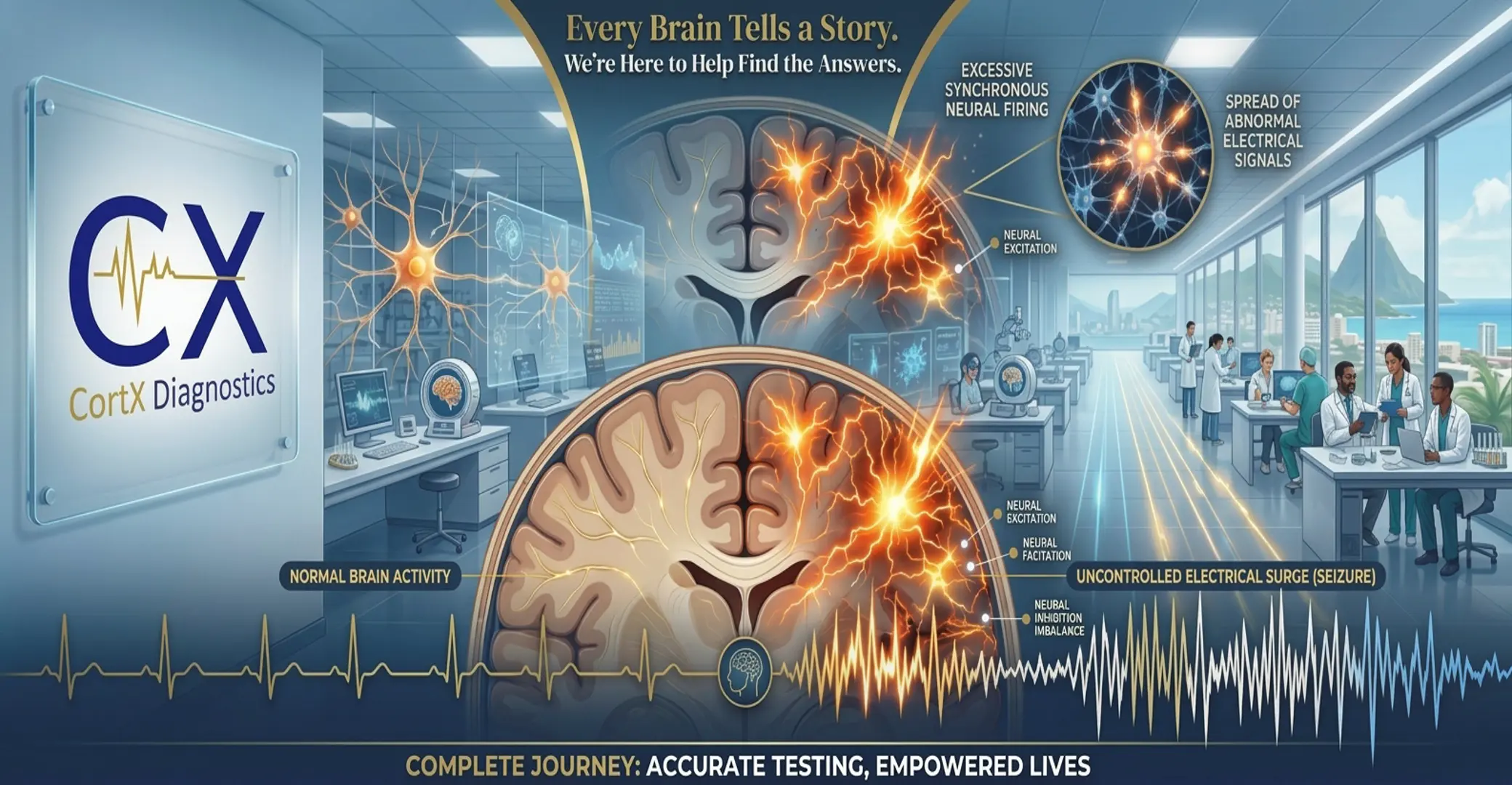
What Is a Seizure?
A seizure is a sudden burst of abnormal electrical activity in the brain that temporarily disrupts normal brain function.
Because different areas of the brain control different functions, seizures can affect:
- Movement
- Awareness
- Memory
- Emotions
- Vision
- Speech
- Sensation
Some seizures involve shaking and loss of consciousness, while others may cause only brief staring, unusual sensations, or confusion.
Special Note: Not everyone who experiences a seizure has epilepsy. A seizure can occur as an isolated event in response to a temporary physical stressor.
Provoked vs. Unprovoked Seizures
Provoked (Symptomatic) Seizures
Examples include:
- High fever
- Very low blood sugar
- Alcohol withdrawal
- Certain medications or drugs
- Severe infections
- Significant head injuries
People who experience a provoked seizure are not automatically diagnosed with epilepsy.
Unprovoked Seizures
Occur without an immediate external or acute systemic trigger, reflecting an intrinsic predisposition of the brain.
References: World Health Organization (WHO); Epilepsy Foundation; International League Against Epilepsy (ILAE).
Phases of a Seizure
Beginning (Aura / Prodrome)
Some individuals experience warning signs minutes or hours before a seizure, such as mood changes or anxiety, or an aura with sensory disturbances like an unusual smell, taste, or visual flicker. An aura is actually a localized focal seizure.
Middle (Ictal Phase)
The active phase of abnormal electrical discharge. Symptoms depend on the affected brain area and can include muscle stiffening, jerking, blank staring, confusion, loss of consciousness, or automatic movements such as lip smacking.
End / Recovery Phase (Post-Ictal Phase)
The recovery period after seizure activity stops. The person may experience deep sleepiness, confusion, headache, temporary weakness, or muscle aches. This phase may take minutes or several hours.
What Is Not Epilepsy? FND and PNES
Not all sudden, seizure-like episodes are epileptic in nature. Other conditions that mimic seizures include:
- Syncope (Fainting): Temporary loss of consciousness caused by reduced blood flow to the brain.
- Migraines and Movement Disorders: Can involve sensory or motor disturbances that mimic focal seizures.
- Sleep Disorders: Narcolepsy, REM sleep behavior disorder, or night terrors can cause sudden nighttime movements, loss of muscle tone, or sudden awakenings.
- Psychogenic Non-Epileptic Seizures (PNES) / Functional Neurological Disorder (FND): Episodes that physically resemble epileptic seizures but are not caused by abnormal electrical discharges in the brain.
- Provoked (Acute) Seizures: Seizures triggered directly by a temporary medical condition or systemic insult, such as severe electrolyte imbalances, extreme low blood sugar, acute high fevers in infants, or active drug withdrawal.
Functional Neurological Disorder (FND) / PNES
Psychogenic Non-Epileptic Seizures (PNES), also recognized within the framework of Functional Neurological Disorder (FND) as functional seizures, are events whose outward appearance resembles epileptic seizures but without abnormal electrical discharges in the brain.
The Cause
PNES events are involuntary physiological responses to severe emotional stress, psychological trauma, or complex neurological processing imbalances within the autonomic nervous system.
Diagnosis
FND is confirmed using video-EEG monitoring. During an event, the EEG records normal electrical activity in the brain, ruling out epilepsy.
Treatment
Anti-seizure medications are ineffective for FND. Primary management involves psychological interventions such as Cognitive Behavioral Therapy (CBT), stress management techniques, and specialized neurological rehabilitation.
What Causes FND?
- FND is usually associated with how the brain and body respond to stress, emotional challenges, psychological trauma, or other underlying factors.
- Every person's situation is different.
- FND is not caused by abnormal brain electrical activity like epilepsy.
Specialized neurological rehabilitation, CBT, and stress management techniques may form part of an individualized treatment plan.
Why Do PNES and Epilepsy Look Similar?
Both conditions may cause:
- Shaking movements
- Unresponsiveness
- Falls
- Changes in awareness
- Confusion after an episode
Because the symptoms can look very similar, it can be difficult to tell the difference based on observation alone. This is why specialized testing is often necessary.
Can Someone Have Both Epilepsy and FND?
Yes.
Some individuals have both epileptic seizures and non-epileptic events. This makes accurate diagnosis especially important because treatment approaches may differ significantly.
Why Accurate Diagnosis Matters
Receiving the correct diagnosis helps patients:
- Avoid unnecessary medications
- Receive appropriate treatment
- Better understand their condition
- Improve quality of life
- Develop effective management strategies
A Message to Patients and Families
Seizure Types
Seizures are broadly classified based on where the electrical activity originates in the brain.
Focal Seizures
Focal seizures originate in a localized area within one hemisphere of the brain:
- Focal Preserved Consciousness: The individual remains aware. Symptoms may include twitching of a single limb, unusual smells or tastes, tingling, or emotional shifts.
- Focal Impaired Consciousness: Awareness is lost or altered. The person may appear to space out, give uncoordinated responses, or display automatisms such as lip-smacking, chewing, or fumbling with clothes.
- Focal to Bilateral Tonic-Clonic: A seizure begins in a localized area and subsequently spreads across both hemispheres, leading to a generalized convulsion.
Generalized Seizures
Generalized seizures engage networks across both sides of the brain from the beginning:
- Absence Seizures: Brief episodes of sudden staring and immediate loss of awareness, lasting 5 to 20 seconds.
- Generalized Tonic-Clonic Seizures: Sudden muscle stiffening followed by rhythmic jerking of the limbs.
- Atonic Seizures (Drop Attacks): Sudden loss of muscle tone causing the person to drop their head or collapse.
- Myoclonic Seizures: Brief, shock-like muscle jerks affecting specific muscle groups or the entire body.
- Tonic Seizures: Sustained muscle stiffening without the rhythmic jerking phase.
Important: this article is general information only. It does not replace advice from a qualified healthcare professional. In an emergency, contact your local emergency medical service immediately.