
EEG monitoring for critically ill patients
Hospital-based EEG monitoring plays an essential role in the evaluation of critically ill patients. CortX Diagnostics supports hospitals and healthcare facilities through professional EEG acquisition, monitoring, and interpretation services designed to assist in the diagnosis of seizures, altered mental status, coma, stroke, traumatic brain injury, and encephalopathy.
We integrate seamlessly into existing clinical workflows to provide dependable diagnostic support when timely neurological evaluation is essential.
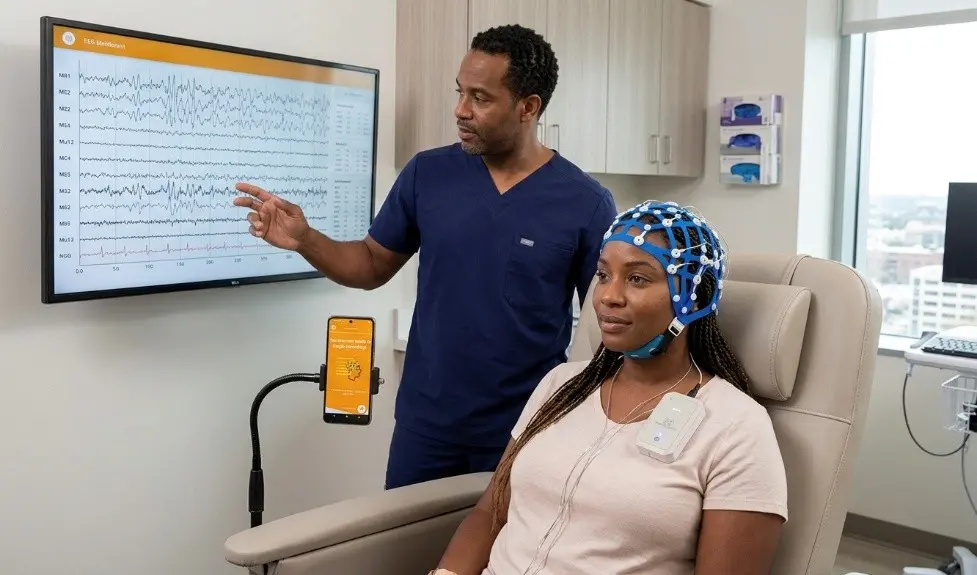
Our hospital-based support assists in the evaluation of:
- Seizure disorders
- Altered mental status
- Coma
- Brain injury
- Stroke
- Brain infections and encephalopathy
- Non-convulsive seizures
- Critical-care neurological monitoring
Detecting non-convulsive seizures with EEG
Some critically ill patients have seizures without any visible shaking. These non-convulsive or "silent" seizures, including non-convulsive status epilepticus (NCSE), can usually only be detected with EEG monitoring.
Continuous EEG monitoring in the ICU helps clinical teams identify hidden seizure activity in patients with unexplained coma or altered mental states, and after cardiac arrest, traumatic brain injury or acute stroke.
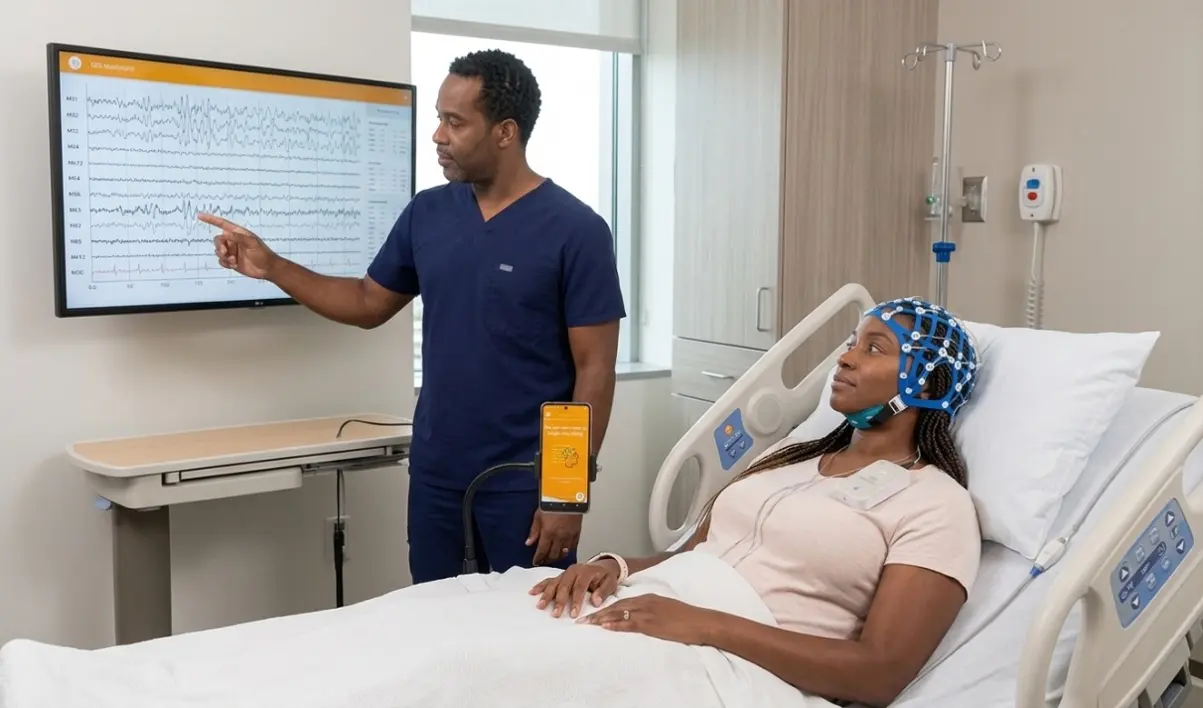
EEG services at your facility
- Prolonged EEG monitoring: continuous monitoring for complex evaluations and critical care/ICU assessments.
- Temporary EEG services: EEG services at your location when you need them, on a bi-annual or quarterly schedule.
- Specialist reading and reporting: fast, reliable report interpretation delivered directly to your clinical team.
- Point-of-care technology: the portable BrainCapture BC-1 EEG system supports continuous EEG and spot EEG at the bedside.
Want to run EEG in-house? See our turnkey EEG laboratory setup and EEG technician training.
Learn more in the Educational Hub
Silent Seizures in Critically Ill & Comatose Patients
How EEG detects hidden seizure activity in critically ill, unconscious, sedated, or comatose patients.
Read: Silent Seizures in Critically Ill & Comatose Patients →Understanding Non-Convulsive Seizures
Seizures without visible shaking: who is at risk, why they are hard to detect, NCSE, and why EEG is essential.
Read: Non-Convulsive Seizures (Silent Seizures) →Referring Physician Portal
Clinical EEG referral information for physicians and healthcare providers in Barbados and Saint Lucia.
Read: Referring Physician Portal →Frequently Asked Questions
What is an ambulatory EEG?
An ambulatory EEG is a portable brain monitoring test that records electrical activity over an extended period while patients go about their normal daily activities.
How is epilepsy diagnosed?
Epilepsy is diagnosed using medical history, neurological examination, EEG testing, imaging studies, and clinical assessment by qualified healthcare providers.
Do I need a referral for an EEG?
Referral requirements may vary depending on your location and healthcare provider.
Can EEG testing detect silent seizures?
Yes. EEG monitoring is often the most effective method for identifying non-convulsive seizures and other abnormal brain activity that may not be visible clinically.
Where does CortX Diagnostics provide services?
CortX Diagnostics provides neurodiagnostic services in Barbados, Saint Lucia, and throughout the Caribbean.
Bring EEG monitoring to your hospital
Talk to our team about hospital EEG services, ICU monitoring, specialist reading, or setting up your own EEG service.