
Treatment Options for Epilepsy
A practical overview of individualized epilepsy treatment, medications, diets, surgery, neurostimulation, and ongoing monitoring.
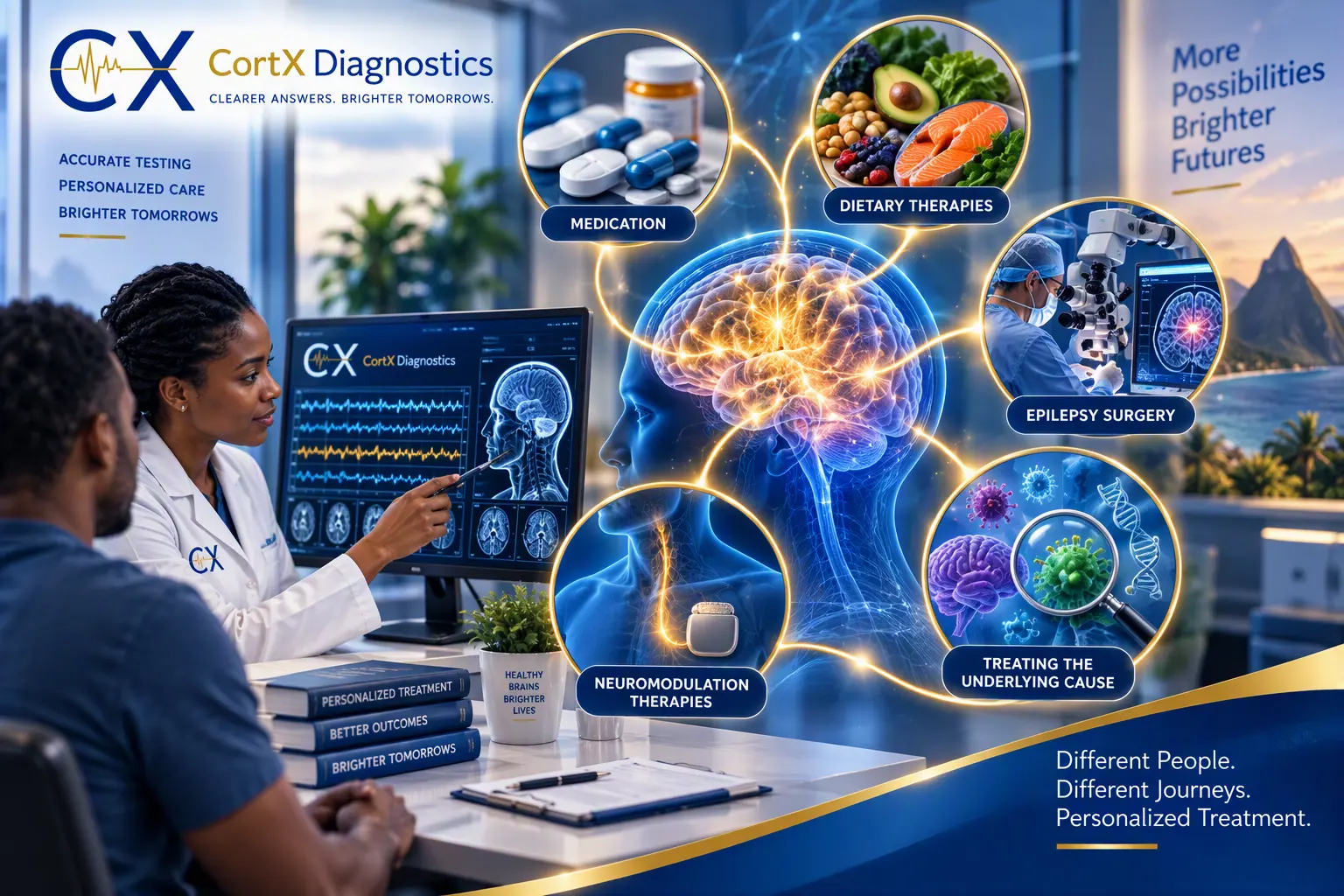
There Is No One-Size-Fits-All Treatment
Epilepsy treatment is highly individualized. The best treatment depends on:
- The type of epilepsy
- The type of seizures
- The cause of epilepsy
- Age and overall health
- Lifestyle factors
- Response to previous treatments
Many people achieve excellent seizure control with the right treatment plan.
Anti-Seizure Medications
For most people, medication is the first line of treatment. These medications help stabilize electrical activity in the brain and reduce the risk of seizures.
Commonly prescribed anti-seizure medications include:
- Levetiracetam
- Lamotrigine
- Carbamazepine
- Oxcarbazepine
- Valproate
- Lacosamide
Finding the right medication may take time. Some patients respond well to the first medication prescribed, while others may require adjustments.
Tips for Success:
- Take medications exactly as prescribed
- Do not skip doses
- Discuss side effects with your healthcare provider
- Never stop medication without medical guidance
Dietary Therapies
Certain specialized diets can help reduce seizures in some people, particularly children with difficult-to-control epilepsy.
Ketogenic Diet
A high-fat, low-carbohydrate diet that changes how the brain uses energy.
Modified Atkins Diet
A less restrictive version of ketogenic therapy.
Low Glycemic Index Treatment
Focuses on maintaining stable blood sugar levels.
Dietary treatments should always be supervised by qualified healthcare professionals.
Epilepsy Surgery
In some individuals, seizures consistently arise from one specific area of the brain. When medications are not effective, surgery may be considered.
The goal of surgery is to:
- Remove the seizure-producing area
- Disconnect seizure pathways
- Reduce seizure frequency
- Improve quality of life
Many patients experience significant seizure reduction following successful surgery.
Neurostimulation Therapies
Some patients may benefit from medical devices that help regulate abnormal brain activity.
Vagus Nerve Stimulation (VNS)
A small device sends electrical signals through the vagus nerve to help reduce seizures.
Responsive Neurostimulation (RNS)
The device monitors brain activity and delivers stimulation when seizure activity is detected.
Deep Brain Stimulation (DBS)
Electrical stimulation is delivered to carefully selected brain regions involved in seizures.
These therapies are typically used when medications alone are not providing adequate seizure control.
Treating the Underlying Cause
For some patients, addressing the underlying cause can significantly improve seizure control.
Autoimmune Epilepsy
Treatment may involve medications that reduce inflammation and regulate the immune system.
Metabolic Epilepsy
Correcting metabolic abnormalities may reduce seizure activity.
Infectious Epilepsy
Treating the infection can be an important part of seizure management.
Structural Epilepsy
Treatment may include medication, surgery, or other targeted therapies depending on the cause.
Monitoring Treatment Progress
Successful epilepsy management involves regular follow-up and assessment.
Your healthcare provider may use:
- Medical history
- Seizure diaries
- EEG testing
- Brain imaging
- Medication monitoring
These tools help evaluate treatment effectiveness and make necessary adjustments.
The Role of EEG in Treatment Planning
EEG testing helps healthcare providers:
- Diagnose epilepsy
- Identify seizure types
- Classify epilepsy syndromes
- Guide treatment decisions
- Monitor response to therapy
Looking Ahead
Many people with epilepsy achieve seizure freedom or substantial seizure reduction through modern treatment options.
Advances in medications, surgical techniques, neurostimulation therapies, genetics, and diagnostic testing continue to improve outcomes and provide hope for patients and families.
References
- World Health Organization (WHO)
- International League Against Epilepsy (ILAE)
- Epilepsy Foundation
- American Academy of Neurology (AAN)
Important: this article is general information only. It does not replace advice from a qualified healthcare professional. In an emergency, contact your local emergency medical service immediately.